
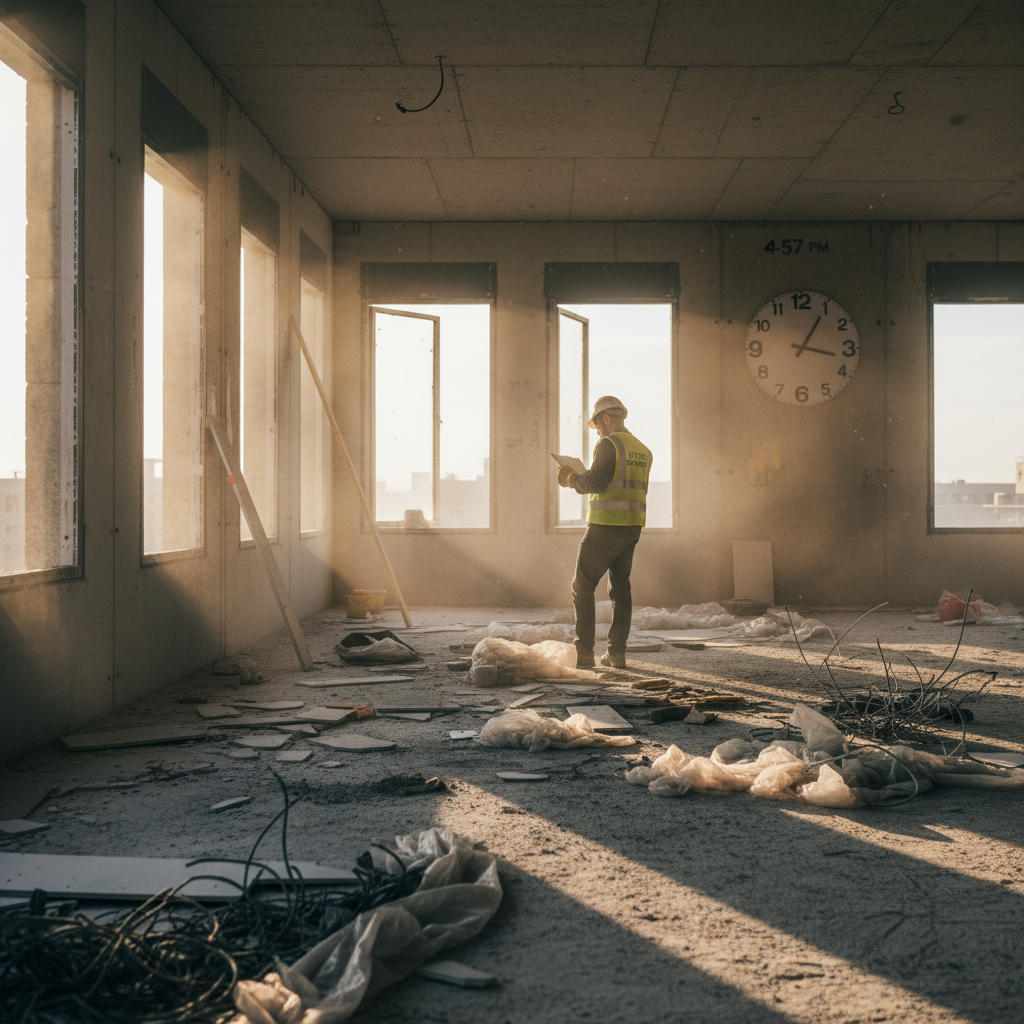
The Clock Starts the Moment Construction Ends
Post-construction cleaning is not a finishing touch — it is a time-sensitive, health-critical operation that most facility managers underestimate until it is already too late. In 2026, the GTA construction market remains one of the most active in North America, with new commercial builds, tenant fit-outs, and major renovation projects completing every week across Mississauga, Brampton, Oakville, and beyond. And in nearly every one of those projects, the same costly mistake gets made: the 72-hour window after construction wraps is treated as a scheduling afterthought rather than the highest-priority phase of the entire project.
At Green Maples Environmental Inc, we have managed post-construction and post-renovation cleaning for medium and large corporate facilities across the Greater Toronto Area for years. What we have seen repeatedly is this: the decisions made — or avoided — in those first three days after construction ends directly determine whether a space opens safely, on schedule, and without liability exposure. This article explains exactly why that window matters, what happens inside a building during those hours, and what a professional cleanup protocol actually involves.
⚡ QUICK ANSWER
The 72-hour window after construction ends is the period during which airborne silica dust, VOCs from adhesives and coatings, and fine particulate matter are at their most hazardous concentrations. Professional post-construction cleaning during this window removes those hazards before they settle permanently into HVAC systems, porous surfaces, and air ducts — protecting occupant health and preserving the building’s finish. Skipping or delaying this phase does not save time; it creates remediation costs that are typically 3 to 5 times greater than the original cleanup investment.
What Is Actually Happening Inside a Building During the First 72 Hours?
The immediate post-construction environment is chemically and physically hostile in ways that are invisible to the naked eye. Once the last tradesperson leaves a site, the space enters a phase that industrial hygienists refer to as the “off-gassing and settlement window” — and it is far more consequential than most corporate facility managers realize.
Drywall compound, concrete cutting, and tile grinding all release respirable crystalline silica — a documented carcinogen classified by the International Agency for Research on Cancer (IARC) as a Group 1 carcinogen. According to the Canadian Cancer Society, occupational exposure to silica dust is a leading risk factor for lung cancer and silicosis, and particles can remain suspended in indoor air for 48 to 72 hours following active construction. That means a space that “looks clean” an hour after construction wraps may still be saturated with hazardous particulates at concentrations well above safe thresholds.
Simultaneously, freshly applied paints, sealants, caulking compounds, and flooring adhesives are actively off-gassing volatile organic compounds (VOCs). According to Health Canada, VOC concentrations in newly constructed or renovated indoor spaces can be two to five times higher than outdoor levels and have been linked to short-term respiratory irritation, headaches, and longer-term health effects with sustained exposure. In a corporate office environment, introducing workers to an inadequately cleaned post-construction space is not just operationally problematic — it is a potential occupational health liability.
Beyond air quality, fine construction dust settles into HVAC intakes, return air ducts, and ventilation diffusers within hours. Once embedded there, it circulates through the building continuously. Our team regularly encounters situations where facilities in Mississauga and the broader GTA have skipped or rushed the initial post-construction phase only to face HVAC remediation costs months later — a completely preventable outcome.
Why Does the 72-Hour Timeline Matter So Specifically?
The 72-hour threshold is critical because it represents the point at which fine particulates transition from airborne to permanently embedded. After that window closes, the cleaning challenge changes from removal to remediation — and the cost, effort, and disruption increase dramatically.
Here is what happens on a biological and physical level in a post-construction space during those three days:
Hours 0–24: Active Suspension Phase
Fine particulates — including silica, gypsum, and wood dust — are at peak airborne concentration. HVAC systems running during this period act as distribution networks, pulling contaminated air through ductwork and depositing particles throughout the building. This is also when VOC concentrations peak, making the space genuinely hazardous for unprotected entry without proper respiratory equipment. A professional cleaning crew should not enter without PPE compliance during this phase; a general maintenance worker certainly should not.
Hours 24–48: Initial Settlement and Surface Bonding
Heavier particles begin settling on horizontal surfaces — window ledges, ceiling tiles, light fixtures, furniture, and exposed flooring. During this phase, particles that land on porous surfaces begin bonding with the material. Concrete floors, unsealed grout lines, and acoustic ceiling tiles are particularly vulnerable. This is the last viable window for efficient surface removal before aggressive scrubbing or chemical intervention becomes necessary.
Hours 48–72: Penetration and Permanent Embedding
By the end of the third day, fine silica and calcium-based particles have penetrated surface pores. Adhesive residue from protective films on windows and flooring has begun to cure and harden. HVAC filters are loaded with debris and, if not replaced, will continue recirculating contamination. At this point, professional intervention is still effective — but the scope of work, and the cost, have increased significantly compared to an immediate post-construction response.
“The most expensive post-construction cleaning job we do is always the one that was delayed. What should have been a single-phase cleanup becomes a multi-visit remediation project — and the facility operator is left explaining to incoming tenants why their move-in date shifted.”
— Green Maples Environmental Inc Operations Team, Mississauga
What Does Professional Post-Construction Cleaning Actually Include?
Professional post-construction cleaning is a multi-phase, technically specialized service — not an extension of routine janitorial work. Our team at Green Maples Environmental Inc approaches every post-construction and post-renovation cleaning engagement with a structured protocol designed for corporate and commercial environments.
Here is what a properly scoped post-construction cleanup involves across the GTA and beyond:
| Cleaning Phase | Key Activities | Equipment / Method | Timing in Window |
|---|---|---|---|
| Rough Clean | Remove large debris, construction materials, packaging, adhesive protective films | Manual removal, industrial vacuums with HEPA filtration | Hours 0–24 |
| Detail Clean | Wipe all surfaces, clean fixtures, sanitize bathrooms, clean inside cabinets and millwork | Microfibre systems, HEPA vacuums, low-VOC cleaning solutions | Hours 24–48 |
| Final Clean | Window cleaning, floor stripping and waxing or sealing, touch-up of all surfaces, HVAC vent cleaning | Swing machines, floor care systems, extension window tools | Hours 48–72 |
| Inspection & Signoff | Walk-through with facility manager, punch list review, documentation for tenant handover | Inspection checklist, digital reporting | End of Hour 72 |
For facilities where construction has involved exterior work — loading docks, building facades, or adjacent hardscaping — commercial power washing is integrated into the final clean phase. Our commercial pressure washing capabilities cover both vertical and horizontal surfaces and are deployed regularly for facilities across Ontario, ensuring that construction debris, concrete splatter, and adhesive runoff are removed from the building envelope before occupants arrive.
Floor care is another critical component that is often misunderstood in the post-construction context. Newly installed flooring — whether vinyl composite tile, hardwood, or polished concrete — requires specific treatment immediately after construction. Floor stripping and waxing protocols must be calibrated to the floor type and the finish applied during construction. Applying a standard wax coat over construction dust residue creates a cloudy, uneven finish that requires complete stripping and reapplication. Our teams working across Mississauga, Brampton, and Oakville are trained to identify floor conditions and apply the correct finish treatment the first time.
How Do You Choose the Right Construction Cleanup Services in Ontario?
The right construction cleanup services in Ontario are distinguished not by price, but by protocol, equipment standards, and documented experience in commercial environments. Any company can show up with mops and buckets — a qualified post-construction cleaning provider shows up with a phase-specific plan, HEPA-rated equipment, trained crew members in appropriate PPE, and a handover checklist that protects your facility and your tenants.
When evaluating providers for post construction cleanup in Ontario CA, here are the non-negotiable criteria:
HEPA Filtration Equipment
Standard shop vacuums do not capture fine silica or sub-micron particulates — they redistribute them. Any legitimate post-construction cleaning provider must use vacuums equipped with true HEPA filters rated to capture 99.97% of particles at 0.3 microns. This is non-negotiable for silica compliance and indoor air quality protection.
Commercial Insurance and WSIB Coverage
Post-construction sites carry elevated risk profiles. Verify that any provider you engage carries adequate general liability insurance and is in good standing with WSIB Ontario. At Green Maples Environmental Inc, we carry full commercial coverage and our WSIB compliance documentation is available upon request for every project we undertake in the GTA.
Green Commercial Cleaning Certification and Practices
Especially in a post-construction environment already saturated with VOCs and airborne chemicals, the cleaning products introduced into the space matter enormously. Our commitment to green commercial cleaning services means we use low-VOC, biodegradable cleaning solutions that do not add to the chemical load already present in a freshly built space. Green commercial cleaning is not a marketing phrase at our organization — it is the operational standard we hold our crews to on every project, from Mississauga to Brampton to Oakville.
Documented Post-Construction Cleaning Checklist and Handover Protocol
A professional provider completes every project with a documented signoff, not just a verbal confirmation. For corporate tenants and property managers, that documentation becomes part of the occupancy record and demonstrates due diligence in tenant health and safety compliance. Our team provides digital reporting and photographic verification for every post-construction and post-renovation cleaning engagement we complete across Ontario.
We also encourage facility managers to explore the breadth of our services beyond project-specific cleaning. Our ongoing facility management capabilities — from Public Transportation Cleaning to specialized institutional and Non Profit Organizations Cleaning Services In Ontario — reflect the same operational rigour we bring to post-construction environments.
What Gets Missed When Post-Construction Cleaning Is Rushed or Skipped?
Rushing or skipping professional post-construction cleaning consistently produces the same list of costly outcomes — outcomes our team has been called in to address on behalf of facility managers throughout Mississauga, Brampton, and the wider GTA. Each one was preventable.
HVAC system contamination is the most common and most expensive missed item. Construction dust drawn into ventilation systems during the active post-construction period coats fan blades, filter banks, and ductwork. The result is degraded air quality that persists for months and triggers complaints from occupants within days of move-in. HVAC remediation in a commercial building is a significant capital expenditure that dwarfs the cost of proactive duct protection and vent cleaning during the original cleanup window.
Window and glass surface damage is consistently underestimated. Construction splash from concrete, caulking, and paint cures quickly on glass. After 72 hours, removal requires aggressive mechanical or chemical intervention that risks scratching or etching the glass surface itself. Window cleaning during the active window is fast, inexpensive, and highly effective — the same work after 72 hours can cost three times as much.
Floor finish failure is another predictable outcome of delayed action. Dust embedded in floor surfaces before sealing or waxing is applied creates an unstable substrate that causes premature finish failure, requiring full floor stripping and reapplication within months. This is a particularly acute issue in commercial spaces in Mississauga and Brampton where high-traffic polished concrete and VCT flooring are common in newly constructed tenant spaces.
Grout and porous surface staining occurs rapidly when calcium-based construction dust penetrates unsealed grout lines in tile flooring and walls. Once cured, this staining requires acidic cleaning compounds and mechanical scrubbing that risk damaging tile and grout integrity — particularly in washrooms and kitchen areas of corporate office builds.
Delayed tenant occupancy and reputational risk round out the operational costs. When a corporate tenant walks into a space that smells of paint fumes, has dusty surfaces, and shows visible residue on fixtures and flooring, the property manager’s credibility takes an immediate hit. In competitive commercial real estate markets across the GTA, tenant experience during move-in directly influences lease renewal decisions.
Ready to Protect Your Facility From Day One?
At Green Maples Environmental Inc, our post-construction cleaning teams are available across Mississauga, Brampton, Oakville, and the broader GTA — mobilizing within your 72-hour window to deliver a safe, tenant-ready space on schedule. From initial rough clean through final floor care and HVAC vent treatment, we manage the entire scope so your project closes properly.
Contact our team today to discuss your project timeline and receive a detailed scope of work tailored to your facility.
✍️ Written by the Green Maples Environmental Inc Operations Team
Green Maples Environmental Inc is a Mississauga-based commercial cleaning and facility management company serving medium and large businesses across the Greater Toronto Area. Our team brings hands-on expertise in post-construction cleaning, commercial floor care, green cleaning practices, and full-scope facility services for corporate environments throughout Ontario.
Frequently Asked Questions
How long does post-construction cleaning take for a commercial office space?
The duration depends on the size of the space, the scope of construction, and the condition of the site — but for a standard corporate office build or tenant fit-out in the GTA, a full three-phase post-construction cleaning typically takes between one and four days. A 10,000–20,000 sq ft space completed to a finish-ready standard generally requires two to three days when a properly resourced professional crew is deployed. At Green Maples Environmental Inc, we scope each project individually and commit to timelines that align with your occupancy date.
What makes post-construction cleaning different from regular commercial janitorial service?
Post-construction cleaning is fundamentally different in scope, equipment requirements, and technical complexity. It involves the removal of hazardous silica dust, VOC-laden air management, adhesive and construction residue removal, HVAC vent cleaning, and specialized floor care — none of which fall within a standard janitorial scope of work. Regular janitorial teams are trained and equipped for maintenance cleaning of occupied spaces; post-construction cleaning requires HEPA-grade vacuums, PPE protocols, and knowledge of construction materials and their specific residue characteristics. Sending a regular cleaning crew into an active post-construction environment is both ineffective and potentially hazardous.
Why should I hire a professional instead of using the general contractor’s cleanup crew?
General contractors typically perform a basic site broom-clean as part of their contractual obligations — this is not the same as professional post-construction cleaning. A GC broom-clean removes large debris and visible materials; it does not address airborne particulate management, HVAC protection, floor finishing preparation, window detailing, or fixture sanitization. More importantly, a GC cleanup crew is not independently accountable for the cleanliness standard required for tenant occupancy. A professional post-construction cleaning company provides documented quality assurance, appropriate insurance coverage, and a handover checklist that protects the facility manager and the property owner from liability.
Can I schedule post-construction cleaning before the contractor has fully completed the site?
Yes — and in many cases, phased cleaning is the most effective approach for large commercial projects. For multi-floor fit-outs or complex builds, our team can begin rough-clean operations on completed floors or zones while construction continues elsewhere. This phased model is commonly used by our teams on projects across Mississauga and Brampton, and it allows facility managers to maintain a compressed occupancy timeline without compromising the quality of the final result. The critical factor is clear communication between the cleaning team and the general contractor to ensure work zones are defined and sequenced correctly. Contact Www.Gmecanada.Ca to discuss phased project scheduling with our team.