
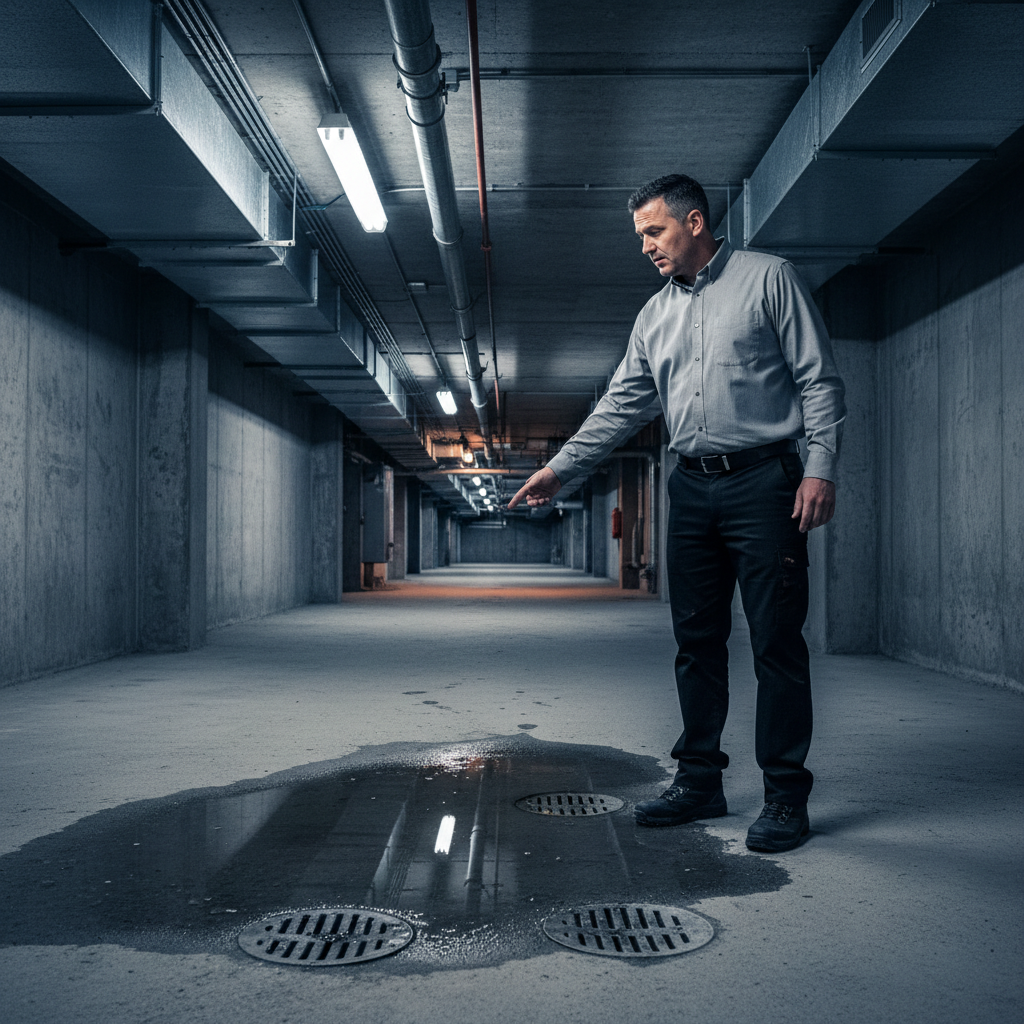
Why Drain Cleaning in Mississauga Is the Facility Problem Nobody Plans For — Until It Costs Them Everything
If you manage a commercial facility and drain cleaning mississauga has never made it onto your maintenance calendar, you are one clogged floor drain away from a very expensive morning. We have seen it happen to well-run buildings across the GTA — a slow drain ignored through Q4 becomes a sewage backup in February, a health violation by March, and an emergency remediation invoice that clears $15,000 before lunch. In 2026, with facility operating costs continuing to rise across Mississauga, Brampton, Oakville, and the broader Ontario market, reactive maintenance is a luxury most organizations simply cannot afford.
At Green Maples Environmental Inc, we work with medium and large commercial facilities across the GTA every single day. Drain health is one of the first things our team assesses during a facility walkthrough — and it is almost always one of the last things facility managers think to schedule. This guide is our honest, practical answer to that gap.
⚡ QUICK ANSWER
A commercial facility’s drain cleaning schedule should run quarterly as a baseline, with monthly service for high-traffic or high-risk areas such as loading docks, parking garages, and washrooms. Facilities that follow a structured preventative schedule avoid the average $8,000–$15,000+ cost of emergency backup remediation, health code responses, and business interruption. Green Maples Environmental Inc provides commercial drain cleaning ontario-wide, with scheduling tailored to your building’s specific risk profile.
What Does a Commercial Drain Backup Actually Cost a GTA Facility?
A commercial drain backup costs far more than the plumbing bill — it triggers a cascade of operational, regulatory, and reputational expenses that catch most facility managers off guard. The direct cost of an emergency drain response in Ontario typically ranges from $3,000 to $8,000 depending on severity and access, but that number is just the starting point.
According to the Institute of Inspection, Cleaning and Restoration Certification (IICRC), water damage and sewage backup remediation in commercial settings averages between $7,500 and $15,000 per incident when factoring in extraction, drying, sanitization, and surface restoration. For larger facilities — think multi-floor office buildings, industrial warehouses, or mixed-use properties — that ceiling climbs considerably higher.
Beyond remediation, there are secondary costs that rarely get discussed in the initial panic: business interruption losses if affected areas must close, compliance penalties from public health authorities in Peel Region or the City of Toronto, and the long-term cost of tenant dissatisfaction or lease non-renewals. A single preventable backup can turn a $400 quarterly drain maintenance line item into a $15,000+ crisis.
“Preventative drain maintenance is not a janitorial expense — it is risk management. The facilities that understand this distinction are the ones that never have to call us at 7am on a Monday.”
— Green Maples Environmental Inc Operations Team
The Government of Canada’s Health Canada guidelines for commercial building sanitation also make clear that standing water and sewage exposure in occupied facilities can trigger mandatory reporting obligations — obligations that come with their own administrative and legal costs entirely separate from the cleaning bill.
How Do You Build a Facility Maintenance Schedule That Actually Prevents Drain Backups?
A strong facility maintenance schedule for drain health is built around frequency, risk zoning, and seasonal awareness — not just a generic “once a year” line item. Every commercial facility has different drain risk profiles depending on its use type, footfall, and infrastructure age.
Here is how our team at Green Maples Environmental Inc structures drain maintenance programs for facilities across Mississauga, Oakville, Brampton, and Toronto:
Step 1: Zone Your Facility by Drain Risk Level
Not every drain in your building carries the same risk. A rooftop drain and a loading dock floor drain are fundamentally different challenges. Risk zoning is the foundation of a smart maintenance plan — it lets you allocate budget and scheduling attention where it actually matters, rather than treating all drains equally and underfunding the ones most likely to fail.
| Drain Zone | Risk Level | Recommended Frequency | Key Hazards |
|---|---|---|---|
| Loading Docks & Receiving Areas | High | Monthly | Debris, packaging materials, sediment buildup |
| Parking Garages | High | Monthly (spring & fall critical) | Road salt, oil, leaf matter, sediment |
| Public Washrooms | Medium-High | Bi-Monthly | Hair, paper product accumulation, soap scum |
| Rooftop & Exterior Drains | Medium-High | Quarterly (pre-spring, pre-winter) | Leaf debris, ice formation, sediment |
| Office Floor & Utility Drains | Low-Medium | Quarterly | Dust, infrequent use trap drying, minor debris |
Step 2: Align Your Schedule to Ontario’s Four High-Risk Seasons
Ontario’s climate creates four distinct drain stress periods that any commercial property in the GTA must plan around. Facilities in Mississauga and Brampton that do not account for seasonal loading consistently outpace our emergency call volume compared to those that do. Here is how we frame seasonal scheduling for our clients:
Spring Thaw (March–April): Snowmelt, road salt residue, and accumulated winter debris converge in parking garage drains and exterior catchbasins simultaneously. This is the single highest-risk window for backup events in the GTA. A dedicated spring flush — often paired with commercial power washing ontario-compliant pressure washing of garage surfaces — is non-negotiable for properties with below-grade parking.
Summer Event Season (June–August): Facilities hosting outdoor corporate events, community activities, or high-volume summer foot traffic need supplemental drain checks in July and August. Our event cleaning services teams see elevated drain stress during this window, particularly around outdoor patios, loading zones, and ground-level washrooms.
Fall Leaf Season (October–November): Rooftop drains and exterior catchbasins face heavy organic loading from leaf matter. This is the window where facilities skip a scheduled clean and pay for it in December when a frozen, blocked exterior drain causes water to back up under the building’s foundation.
Winter Salt Season (December–February): Calcium chloride and road salt tracked into parkades create a corrosive sediment that gradually coats drain covers and internal pipe walls. Monthly flushing during this window, combined with professional parking garage cleaning mississauga-compliant protocols, dramatically reduces the scale of your spring thaw cleanup.
Step 3: Document Everything for Compliance and Insurance Purposes
One of the underappreciated benefits of a formal drain maintenance program is the documentation trail it creates. When a backup event does occur — and in commercial facilities, eventually one will — your insurance claim and any regulatory response benefit enormously from a dated service log showing proactive maintenance was performed. Our team provides service documentation with every visit, formatted for facility management records and insurance file requirements.
Why Is Parking Garage Drain Cleaning One of the Most Overlooked Maintenance Items in Ontario?
Parking garage drain health is neglected because the consequences are slow-building and mostly invisible — until they are catastrophically visible. The drain system in a multi-level commercial parkade handles road salt, motor oil, tire rubber particulate, rainwater, snowmelt, and sediment in volumes that most facility managers significantly underestimate.
Commercial parking garage cleaning and drainage maintenance are services where our team sees the widest gap between what a facility thinks it needs and what it actually requires. A parkade that sees 300 vehicles per day in Mississauga is introducing meaningful contamination loads into its drain infrastructure with every vehicle movement. Over a winter season without professional flushing, that accumulation compounds into a blockage profile that no amount of in-house maintenance can address.
Our commercial parking garage cleaning programs integrate drain flushing with surface washing — often using high-pressure water systems consistent with commercial pressure washing ontario standards — so that debris is not just pushed from surfaces into drains, but removed from the system entirely. This integrated approach is what separates a genuine maintenance outcome from a cosmetic clean that creates a secondary blockage problem downstream.
We also work with facilities undertaking post-construction phases. If your building recently completed an interior renovation or structural work, professional post-construction cleaning must include drain flushing as a mandatory step — construction debris, drywall dust, and concrete particulate are among the most aggressive drain cloggers in commercial settings. Our post-renovation cleaning protocols always incorporate drain inspection and flush as a core deliverable, not an optional add-on.
How Green Maples Environmental Inc Delivers Commercial Drain Cleaning Across the GTA
Our approach to drain cleaning and facility sanitation is rooted in the same philosophy that drives everything at Green Maples Environmental Inc — environmental responsibility combined with uncompromising commercial standards. We offer green commercial cleaning services that use biodegradable, low-impact cleaning agents wherever municipal drain systems are involved, reducing the environmental footprint of your facility maintenance program without sacrificing performance.
Our commercial drain cleaning ontario service area covers facilities in Mississauga, Brampton, Oakville, Burlington, Toronto, and surrounding municipalities. We bring the same structured, professional approach to a 20-unit office complex in Oakville as we do to a 500-space parkade in downtown Mississauga. Every facility gets a custom service schedule, a dedicated site contact, and transparent documentation of every service event.
Beyond drain maintenance, our teams are integrated with the broader facility services your building needs — from floor stripping and waxing programs that keep interior surfaces protected, to Public Transportation Cleaning for transit-adjacent facilities, to specialized programs for Non Profit Organizations Cleaning Services In Ontario requiring community-sensitive, budget-conscious maintenance solutions. Our integrated model means your facility manager has a single, accountable partner across all service lines — not a patchwork of vendors who do not communicate with each other.
We are proud to serve as a community cleaning services partner to organizations across the GTA that take their facilities seriously — not just as operational infrastructure, but as a reflection of their commitment to the people who use them every day. Whether your facility serves tenants, employees, customers, or the broader public, the condition of your drains and mechanical systems communicates something about how you run your organization. We help you make sure that message is the right one.
What Are the Signs Your Commercial Drains Need Immediate Professional Attention?
The warning signs of a drain system under stress are distinct and consistent — facilities that act on them early almost never face emergency-level events. These are the indicators our team uses to triage urgency during facility assessments across Brampton, Oakville, and Mississauga:
Slow drainage in multiple fixtures simultaneously: A single slow drain is often a localized blockage. Multiple slow drains across a floor or zone signal a main line issue that requires professional hydro-flushing, not a plunger.
Persistent odours near floor drains or utility rooms: Sulphur or sewage odours near floor drains — especially in basement levels or parking structures — indicate trap failure or downstream partial blockage. This is a health and air quality issue, not just a nuisance.
Gurgling sounds after flush events: Gurgling from floor drains after toilet flushes or sink use indicates negative pressure in the line — a sign of partial blockage creating air displacement in the drain system.
Water pooling near drain covers in parkades or loading areas: Standing water that does not clear within 15–20 minutes of rain or washing activity in a parking area signals a blocked catchbasin or floor drain that requires immediate professional service. This is especially common in Mississauga parkades during the spring thaw window.
Post-construction dusty or grey residue near drains: Following any renovation or fit-out work, construction particulate in and around drain covers is a visible indicator that debris has entered the drain system and a professional post-construction cleaning flush is required before the space is occupied.
Ready to Stop Reacting and Start Preventing?
At Green Maples Environmental Inc, our team builds custom facility maintenance schedules for commercial properties across Mississauga, Brampton, Oakville, and the GTA. If your drains have not been professionally serviced in the last 90 days, let us conduct a complimentary facility drain risk assessment and get you on a schedule that protects your building before the next costly backup event.
✍️ Written by the Green Maples Environmental Inc Team
Our operations and facility management specialists have served commercial properties across the GTA for years, delivering green commercial cleaning and preventative maintenance programs built around the real demands of Ontario’s commercial real estate environment. We write from the field — because that is where the answers actually come from.
Frequently Asked Questions
How often should a commercial facility schedule professional drain cleaning?
Most commercial facilities in Ontario should schedule professional drain cleaning quarterly at a minimum, with monthly service for high-risk zones such as parking garages, loading docks, and high-traffic washrooms. Facilities that skip scheduled service and only respond to visible problems typically face two to four times the annual drain maintenance cost of those on a structured preventative program. Our team tailors every facility maintenance schedule to the specific risk profile and usage patterns of your building.
What is included in a commercial drain cleaning service from Green Maples Environmental Inc?
Our commercial drain cleaning ontario service includes high-pressure hydro-flushing of floor drains, catchbasin cleaning, drain cover removal and manual debris clearing, trap integrity inspection, odour treatment using biodegradable enzyme solutions, and full service documentation provided to your facility manager. For parking structures, we integrate drain flushing with surface washing using commercial pressure washing equipment to ensure debris is fully removed from the system rather than pushed further into the drain line.
Why does seasonal timing matter so much for drain maintenance in the GTA?
Ontario’s climate creates four distinct high-stress windows for commercial drain systems — the spring thaw, summer event season, fall leaf accumulation, and winter road salt period. Each season introduces different materials and volumes into your drain infrastructure. Facilities in Mississauga and across the GTA that align their maintenance schedule to these seasonal peaks prevent the compounding buildup that causes catastrophic backups, rather than simply managing the aftermath after a failure has already occurred.
Can I bundle drain cleaning with other facility maintenance services at my building?
Yes — and bundling is how most of our GTA clients achieve the best value and consistency. Green Maples Environmental Inc offers fully integrated facility maintenance programs that combine drain cleaning with parking garage cleaning, commercial pressure washing, post-construction cleaning, floor care including floor waxing in Oakville and across the region, and regular janitorial services under a single managed contract. Having one professional team accountable for your entire facility means better coordination, consistent service documentation, and a facility manager who can focus on their building rather than managing a roster of separate vendors.