
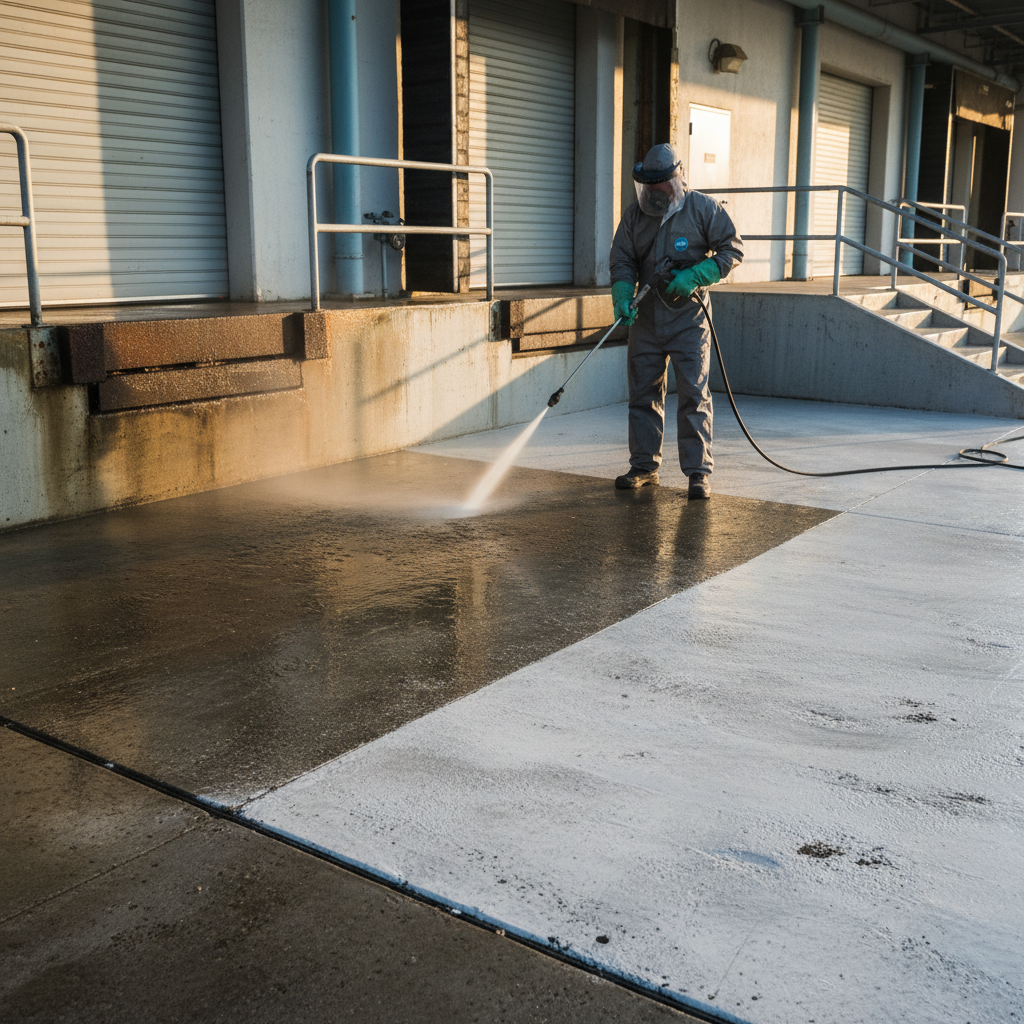
Why Most Facilities Get Commercial Pressure Cleaning Wrong
At Green Maples Environmental Inc — known to our clients simply as GME — we have watched the commercial cleaning industry in the Greater Toronto Area make the same fundamental mistake for years: treating high-pressure washing as a quick cosmetic fix rather than a structured, method-driven process. It is 2026, and we still encounter facilities where pressure cleaning is scheduled reactively, applied inconsistently, and evaluated by the wrong standards. That pattern costs businesses money, shortens the lifespan of their surfaces, and creates liability risks that never show up until it is too late.
This article is our honest, field-level perspective on what separates genuinely effective commercial pressure cleaning from the kind that looks thorough in the moment and fails within a season. We are not going to give you a generic checklist. We are going to tell you exactly how our team thinks about this work — and why that thinking produces different outcomes for the facilities we serve across Mississauga, Brampton, Oakville, and the broader GTA.
QUICK ANSWER
Commercial pressure cleaning done right is not about the highest PSI setting or the fastest turnaround. It requires surface-specific technique, the right biodegradable chemistry, and a pre-planned sequence that protects drains, nearby materials, and the people in the facility. At Green Maples Environmental Inc, every pressure washing job — from parking garage cleaning in Mississauga to post-construction cleaning in Brampton — follows a documented protocol before a single nozzle is aimed.
What Does a Proper Commercial Pressure Cleaning Assessment Actually Look Like?
A proper commercial pressure cleaning assessment starts long before equipment arrives on site — it begins with understanding what the surface is made of, what contaminants are present, and what drainage infrastructure exists. Skipping this step is the single most common reason pressure washing jobs cause surface damage or regulatory problems for facility managers.
When our team arrives at a facility for the first time — whether it is a corporate campus in Mississauga or an industrial building along the 401 corridor — we conduct what we call a surface and load audit. This is not a walk-around with a clipboard. Our technicians identify the substrate type (concrete, asphalt, interlocking stone, steel, glass cladding), document the category of soiling (oils, biological matter, mineral deposits, paint, organic growth), and map the drainage outlets before any water is introduced to the surface.
According to the Canadian Centre for Occupational Health and Safety, uncontrolled wastewater runoff from cleaning operations can introduce contaminants into storm drains that connect directly to local waterways — a compliance risk that falls on the property owner, not the cleaning contractor. We take that seriously. Every pressure washing job we execute includes a wastewater containment and disposal plan that satisfies Ontario environmental regulations.
Our assessment also determines PSI range. This matters more than most clients realize. A residential-grade 3,000 PSI setting applied to an aging concrete parkade floor can fracture the surface sealer and accelerate carbonation of the concrete beneath. Our green commercial cleaning services use calibrated equipment with variable pressure outputs precisely because not every surface in a commercial environment should be treated identically.
“The most expensive mistake a facility manager can make is hiring a pressure washing crew that treats a concrete parkade the same way they treat a residential driveway. The chemistry is different, the pressure range is different, and the downstream compliance obligations are entirely different.”
How We Handle Parking Garage Cleaning Differently Than General Contractors
Parking garage cleaning is one of the most technically demanding forms of commercial pressure washing — and one of the most consistently underdone. The combination of vehicle fluid contamination, road salt residue, tire rubber transfer, and biological growth in low-light areas creates a layered soiling problem that a single pass with hot water does not resolve.
Our commercial parking garage cleaning process in Mississauga and across the GTA uses a three-phase sequence: pre-treatment with a pH-balanced degreaser applied to oil and fuel stains, a directed pressure rinse that moves contaminants toward designated collection points, and a post-clean inspection of all drains and sump pits to ensure nothing has migrated to the storm system. This sequence takes longer than a straight pressure wash. It also produces results that actually last.
According to the International Parking & Mobility Institute, poorly maintained parking structures contribute to slip-and-fall incidents that generate significant liability claims — with accumulated oil and biological growth on ramps and drive lanes being among the most cited contributing factors. Regular, properly executed parking garage cleaning in Ontario is not just aesthetic maintenance. It is risk management documentation that your legal and insurance teams will eventually care about.
We also address the vertical surfaces in parkade environments — the columns, stairwell walls, and elevator lobby areas that accumulate exhaust residue, mold, and contact soiling from thousands of daily users. A parking structure that is clean at floor level but visually deteriorating on its walls and ceilings still reads as neglected to the people using it every day.
Why Post-Construction Cleaning and Graffiti Removal Require Pressure Expertise, Not Just Power
Post-construction cleaning and graffiti removal are two areas where pressure washing is routinely misapplied — and where the consequences of misapplication are visible for years. Both require the same discipline we apply to every other service: the right pressure for the substrate, the right chemistry for the contaminant, and the right sequence to protect surrounding areas.
Post-Construction Cleaning in Brampton and the GTA
Post construction cleaning in Brampton is a significant part of our project work, and it consistently confirms one observation: construction teams leave behind contaminants that require a methodical pressure washing strategy, not an aggressive blast. Silicone overspray, construction adhesive, concrete splatter, efflorescence on brick faces, and sealant residue on glass all respond differently to pressure and chemistry. Treating them uniformly damages surfaces.
Our post-renovation cleaning crews are trained to identify each residue type on arrival and match the removal approach accordingly. A newly poured concrete apron, for example, requires a significantly lower PSI than an exposed aggregate walkway that has cured for 28 days. We bring multiple nozzle configurations to every post-construction site precisely because the substrate conditions change between areas of the same building.
Graffiti Removal Without Surface Sacrifice
Graffiti removal is an area where we see well-meaning but poorly executed pressure washing cause more damage than the graffiti itself. High-PSI direct blasting on painted brick or stucco surfaces strips the original finish along with the vandalism — leaving a visually obvious shadow that is often harder to address than the original mark.
Our graffiti removal process pairs low-to-medium pressure with specifically formulated anti-graffiti solvents that break the bond between the spray paint and the substrate without attacking the underlying surface. For facilities in the Toronto and Mississauga areas that deal with recurring vandalism, we also recommend and apply anti-graffiti coating treatments after removal — creating a non-porous barrier that makes future removal significantly faster and less invasive.
Speed matters in graffiti remediation. Marks that are addressed within 24 to 48 hours require less aggressive intervention and leave a cleaner result. Our team is structured to respond to graffiti removal requests on an expedited basis for clients with active service agreements.
How Our Green Approach to Commercial Pressure Washing Protects Your Facility and the Environment
Green commercial cleaning is not a marketing label for us — it is a set of documented practices that shape every pressure washing job we execute in Mississauga, Oakville, Brampton, and across Ontario. Our green approach reduces environmental impact without reducing cleaning performance, and it has become one of the primary reasons corporate clients choose to work with us.
Our chemical selection policy requires that all cleaning agents used in our commercial pressure washing operations be biodegradable, phosphate-free, and certified under recognized environmental standards. We do not use products that produce volatile organic compounds at concentrations that would affect air quality around the treatment zone. This matters especially in enclosed environments like parking garages, loading docks, and building interiors where our event cleaning service teams also operate post-use.
Water conservation is built into our equipment selection. Our commercial pressure washing units in Ontario are calibrated for optimal output-to-result ratios — meaning we achieve thorough cleaning with significantly less water volume than standard contractor equipment. On a large commercial site, this can represent thousands of litres saved per service visit, which adds up meaningfully over the course of an annual maintenance contract.
For clients with sustainability reporting obligations — a growing segment of the medium-to-large businesses we serve in the GTA — we provide service documentation that supports ESG and environmental compliance reporting. Knowing that your facility maintenance partner operates under a verified green framework is increasingly valuable for corporate governance teams.
We also extend this philosophy to complementary services. Our floor waxing in Oakville and surrounding communities uses low-VOC finish products applied with water-efficient scrubbing equipment. Even our floor stripping and waxing process — which traditionally involves significant chemical application — has been re-engineered to minimize product waste and reduce the volume of stripping solution that enters building drains. You can learn more about the full range of facility services we provide at Www.Gmecanada.Ca.
“A green commercial cleaning service that performs at the highest standard does not ask you to accept lower results for the sake of environmental responsibility. It finds the method where both outcomes are achieved simultaneously — and that is exactly what our team has built.”
What Our Clients Across the GTA Actually Experience
Our client relationships in the GTA span corporate office complexes, industrial facilities, mixed-use developments, municipal properties, and institutional campuses. What unites all of them is a consistent expectation: pressure washing that delivers measurable, documented results without creating secondary problems — damage, runoff violations, surface discoloration, or scheduling disruptions.
We work with facilities management teams that are often juggling dozens of service contracts simultaneously. Our role in that environment is to be the contractor that requires the least amount of oversight — not because we operate independently of client preferences, but because our documentation, communication, and quality control systems are structured to keep facility managers informed without burdening them. Service reports, before-and-after records, and compliance documentation are standard deliverables on every job.
We also serve community organizations and public-sector clients through our Non Profit Organizations Cleaning Services In Ontario program, and our team supports transit infrastructure through our Public Transportation Cleaning services — both of which apply the same pressure washing discipline we bring to private commercial facilities.
Drain cleaning in Mississauga is another service area where our pressure expertise translates directly — high-pressure water jetting for commercial drain maintenance follows the same principled approach as our exterior work: the right tool, the right chemistry, and a sequence that protects the system rather than stressing it.
The facilities that get the most value from our work are the ones that treat commercial pressure cleaning as a planned maintenance activity rather than an emergency response. When we are part of a structured annual or semi-annual maintenance calendar, we can pre-treat problem areas, track surface condition trends over time, and intervene earlier — before minor soiling becomes embedded contamination that requires aggressive and expensive remediation.
Ready to See the Difference in Your Facility?
Whether you manage a corporate campus in Mississauga, a commercial parkade in Brampton, or a multi-use facility across the GTA, our team at Green Maples Environmental Inc is ready to walk your site, assess your needs, and deliver a pressure cleaning program that performs every time. No guesswork. No reactive scheduling. Just structured, professional results.
✍️ Written by the Green Maples Environmental Inc Team — our operations and field management professionals based in Mississauga, Ontario, with over a decade of experience delivering commercial cleaning and facility maintenance services across the Greater Toronto Area. We write from direct field experience, not theory.
Frequently Asked Questions
How often should commercial pressure cleaning be scheduled for a GTA facility?
Most medium-to-large commercial facilities benefit from pressure washing two to four times per year, with frequency adjusted based on traffic volume, surface type, and seasonal factors like road salt accumulation. High-traffic areas such as parking garages and loading docks typically require more frequent service than building facades or low-traffic exterior walkways. Our team at Green Maples Environmental Inc assesses each facility individually and recommends a schedule based on actual surface conditions rather than a generic calendar.
What surfaces can commercial pressure washing safely clean without causing damage?
Commercial pressure washing is safe for concrete, asphalt, brick, natural stone, metal cladding, and most coated surfaces when the correct PSI range and nozzle configuration are applied. Surfaces that require special caution include aged or unsealed masonry, painted decorative elements, and certain composite cladding materials. Our team conducts a surface audit on every new project to match the pressure and chemical approach to the specific substrate — preventing the surface damage that occurs when contractors apply a one-size-fits-all setting.
Why does green commercial cleaning matter for corporate facilities with sustainability reporting obligations?
Green commercial cleaning reduces the environmental impact of facility maintenance by using biodegradable chemistry, minimizing water consumption, and ensuring wastewater is managed in compliance with local environmental regulations. For corporate facilities in the GTA with ESG reporting requirements, partnering with a certified green cleaning provider contributes to verifiable sustainability metrics. At GME, we provide service documentation that can be directly referenced in environmental and corporate responsibility reporting.
Can I combine post-construction cleaning with pressure washing services in a single project scope?
Yes — in fact, combining post-construction cleaning with targeted pressure washing is the most efficient approach for newly completed or renovated commercial sites. Construction residue such as concrete splatter, adhesive overspray, and efflorescence on exterior surfaces is best addressed through a coordinated scope that sequences interior fine cleaning with exterior pressure treatment. Our team regularly delivers combined post-renovation cleaning and commercial pressure washing projects across Brampton, Mississauga, and the broader GTA under a single managed contract.